Upstream, Midstream and Downstream O&M in Oil & Gas
Oil and gas facilities operate across distinct stages of the value chain, each with different processes, assets, operating conditions, and risk profiles. These differences directly influence the operational and maintenance requirements of upstream, midstream, and downstream facilities.
For facility owners and decision-makers, understanding these differences is important when evaluating operations and maintenance requirements, anticipating operational risks, and assessing the capabilities of a potential service partner.
Understanding the Oil and Gas Value Chain
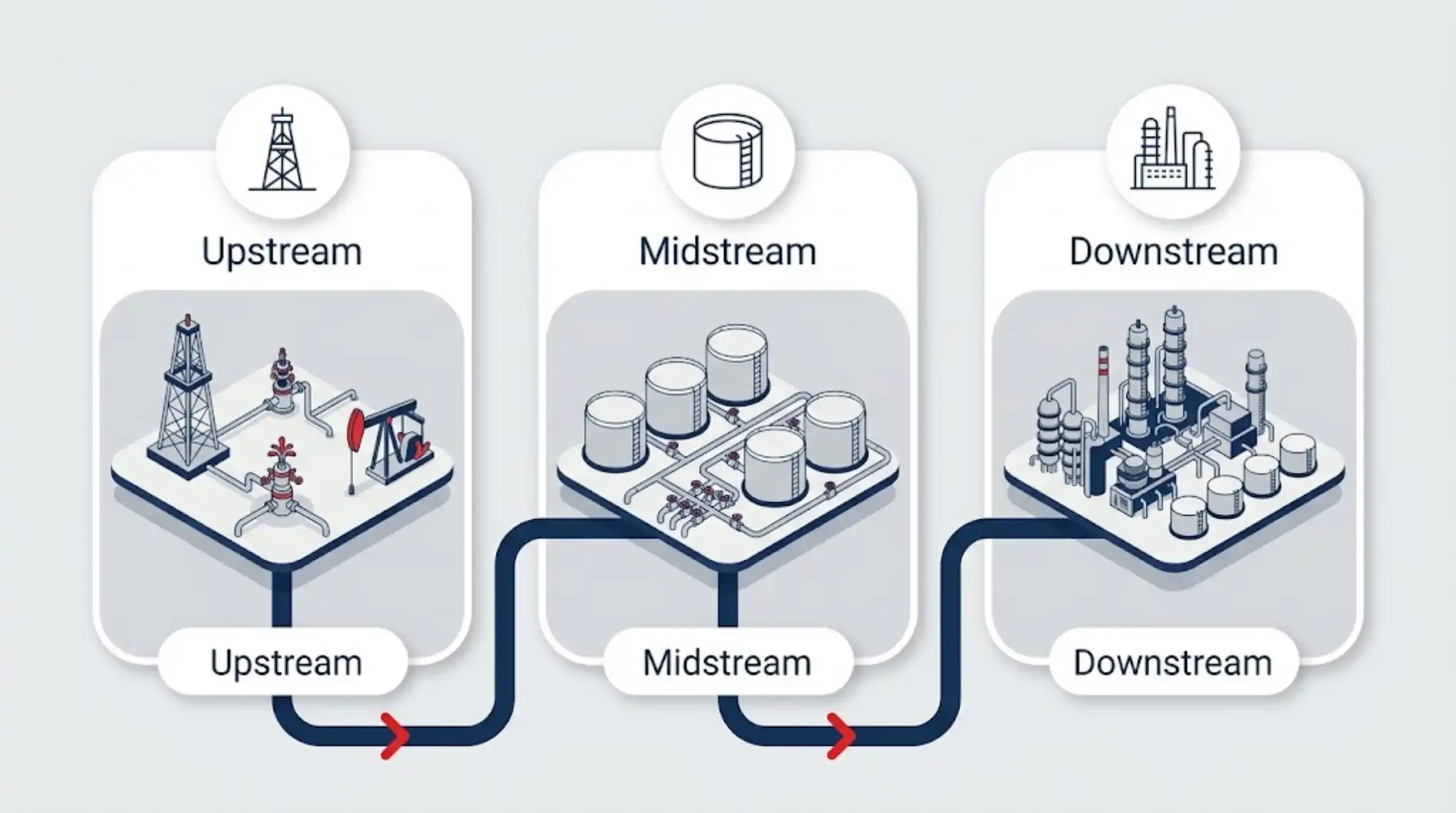
The oil and gas value chain is generally divided into three stages: upstream, midstream, and downstream. While these stages are closely connected, each involves different types of facilities, processes, and operational requirements.
Upstream: Exploration and Production
Upstream covers the activities involved in finding and producing hydrocarbons. This includes geological surveys, drilling, well completion, wellhead operations, and production activities.
The main operational priorities at this stage are production continuity, equipment reliability, and well integrity. Facilities operate under varying geological and production conditions, making effective maintenance important to sustaining production.
Operations and maintenance activities in upstream facilities can therefore focus heavily on production equipment, wellhead systems, inspection, preventive maintenance, corrective maintenance, and reliability management of critical assets.
Midstream: Transportation and Storage
Midstream provides the link between production, processing, and distribution. It includes pipelines, tank farms, storage facilities, terminals, and marine operations.
At this stage, maintaining a safe and reliable flow of products is a key priority. Storage capacity, tank integrity, pipeline reliability, terminal operations, and equipment availability can all affect the performance of the wider value chain.
A problem at a storage facility or terminal can have consequences beyond the individual asset. Depending on its role within the wider network, a disruption can affect supply volumes, transportation schedules, or downstream facilities receiving feedstock.
Midstream operations and maintenance therefore places particular importance on asset integrity, inspection, equipment availability, and the continuity of transportation and storage operations.
Downstream: Refining, Processing and Distribution
Downstream covers the processing of crude oil and natural gas into usable products such as fuels, petrochemicals, and fertilizers, and other refined and processed products, as well as their distribution to the market.
Refineries and process plants contain complex and highly interconnected systems. Equipment failures can affect multiple units and, in some cases, interrupt production across a significant part of the facility.
As a result, downstream maintenance places strong emphasis on equipment reliability, preventive and corrective maintenance, turnaround planning, process safety, and regulatory compliance.
Operations and Maintenance Priorities Across the Three Stages
Although the basic objective of O&M remains the same, keeping facilities safe, reliable, and productive the priorities and specific maintenance requirements vary across the value chain.
Upstream O&M typically focuses on production uptime, well integrity, and equipment reliability. Midstream operations place greater emphasis on asset integrity, storage reliability, and safe, continuous product flow. Downstream facilities require particular attention to process reliability, turnaround execution, and compliance.
These priorities reflect the nature of the assets and processes involved at each stage of the value chain. For facility owners and decision-makers, this distinction is important when defining O&M requirements and evaluating the capabilities of potential service providers.
The Role of O&M in Industrial Facility Performance
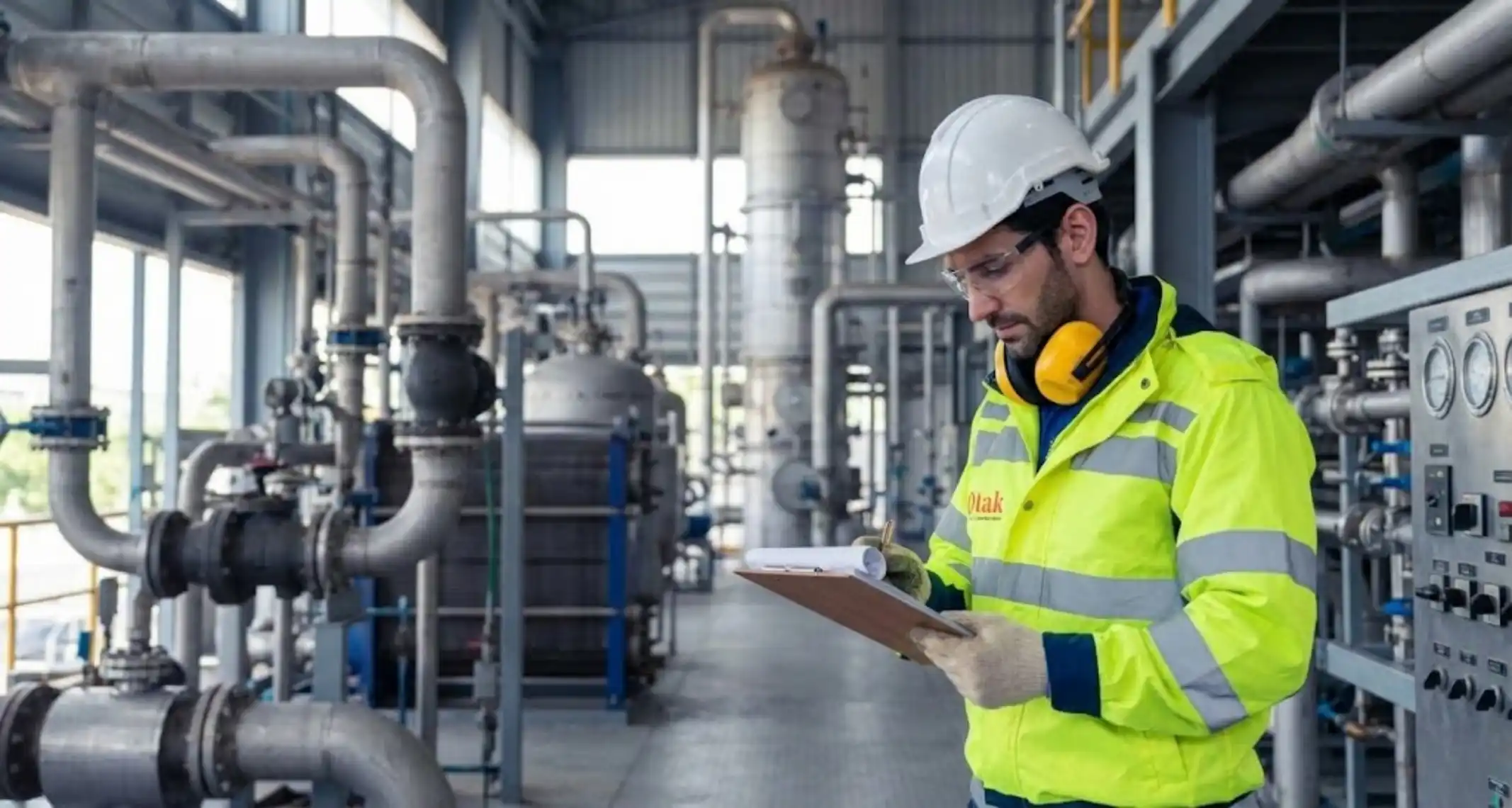
Operations and maintenance is not limited to repairing equipment after a failure. An effective O&M strategy supports asset availability, operational continuity, safety, and long-term facility performance throughout the asset lifecycle.
From commissioning and start-up through routine operations, maintenance, inspection, and planned shutdowns, O&M brings together the technical and operational activities required to keep a facility safe, efficient, and performing as intended.
What Does O&M Include?
Depending on the facility and its position in the value chain, Operations and Maintenance can include:
- Preventive and corrective maintenance
- Equipment inspection and reliability management
- Asset integrity management
- Operations support and supervision
- Commissioning and start-up support
- Turnaround planning and execution
- HSEQ and regulatory compliance
- Energy efficiency and performance improvement
- Technical and engineering support
Operations and Maintenance Across the Asset Lifecycle
O&M extends across the full asset lifecycle, from commissioning and start-up through routine operations, maintenance, inspection, planned shutdowns, and performance improvement. Commissioning and start-up support help prepare equipment, systems, procedures, and operating teams for routine operations.
Once a facility is in service, maintenance, inspection, reliability management, and operational support become ongoing activities, while turnaround planning and execution support major maintenance and inspection work during planned shutdowns.
Choosing the Right Operations and Maintenance Partner
Choosing an O&M partner requires careful consideration of the capabilities and experience relevant to the facility.
Three areas are particularly important:
- Relevant technical experience: The contractor should understand the equipment, processes, and operating conditions associated with the specific type of facility.
- Operational and safety capabilities: O&M activities directly affect facility availability, safety, and compliance. Experience with the relevant HSEQ requirements is therefore essential.
- Proven track record: Past experience with similar facilities can provide a clearer indication of whether a contractor is equipped to manage the operational and maintenance requirements involved.
The right partner should bring more than maintenance manpower. Owners need a team that understands how maintenance, operations, reliability, safety, and facility performance are connected.
How OTAK Supports Operation & Maintenance
OTAK provides Operations & Maintenance services for oil and gas, petrochemical, fertilizer, and other large-scale industrial facilities, with solutions tailored to the operational requirements of each facility.
OTAK’s multidisciplinary approach combines technical and operational expertise to support the specific requirements of each facility.
Learn more about OTAK’s Operations & Maintenance services.