Safety Performance as an Owner Asset: The Role of O&M
For facility owners, safety performance is often viewed through compliance requirements, incident rates, and HSE reports. These measures are important, but they do not represent the full value of safety.
In industrial facilities, the way operations are managed can influence much more than workplace safety. Poor operational discipline, weak maintenance practices, or ineffective process safety controls can contribute to incidents that disrupt production, damage assets, and affect the confidence of employees, customers, partners, and other stakeholders.
Safety performance is therefore closely connected to asset protection, operational continuity, and the reputation associated with the facility and its operation.
Why Safety Performance Matters Beyond Compliance
Meeting regulations and maintaining required safety standards are fundamental responsibilities for any industrial facility. However, strong safety performance should not be treated simply as a compliance exercise.
A facility can meet basic reporting requirements while still having weaknesses in areas such as maintenance, operating discipline, management of change, or process safety. These weaknesses may not immediately appear as major incidents, but they can create conditions in which operational risks become harder to control.
This is why safety performance management increasingly looks beyond lagging indicators and considers leading indicators that can identify weaknesses before they contribute to a more serious event. The fourth edition of API Recommended Practice (RP) 754 provides a framework for process safety performance indicators in the refining and petrochemical industries, including both leading and lagging indicators.
For owners, the wider question is not simply whether an incident has occurred. It is whether the facility is being operated and maintained in a way that consistently identifies and controls risks before they develop into larger problems.
The Link Between Safety, Operations, and Reputation
Safety performance is closely connected to the quality of day-to-day operations.
Equipment does not remain safe simply because it was designed and installed correctly. Its condition needs to be monitored, maintenance needs to be performed properly, operating procedures need to be followed, and personnel need to understand the risks associated with their activities.
These controls are interconnected. A maintenance deficiency can affect equipment integrity; an equipment issue can affect operating conditions; and a weakness in operating controls can increase the consequences of an otherwise manageable problem.
When these elements work together, they create stronger operational controls. When they are neglected, relatively small weaknesses can accumulate and increase exposure to larger operational risks.
For an owner, the consequences of a serious incident can extend well beyond the immediate event.
When Operational Incidents Become Reputation Risks
A major incident can result in equipment damage, production interruption, environmental consequences, regulatory attention, and significant financial costs. It can also affect how stakeholders perceive the owner’s ability to manage its assets responsibly.
In industries where major accident hazards are present, incidents can also expose weaknesses in areas such as asset integrity, operating discipline, process safety management, and management of change. These issues can become relevant to reputation because stakeholders are assessing not only what happened, but how effectively the facility was being managed before the event.
This makes reputation a practical consideration in operational risk management, rather than something that should only be addressed after an incident occurs.
How Professional O&M Supports Safety Performance
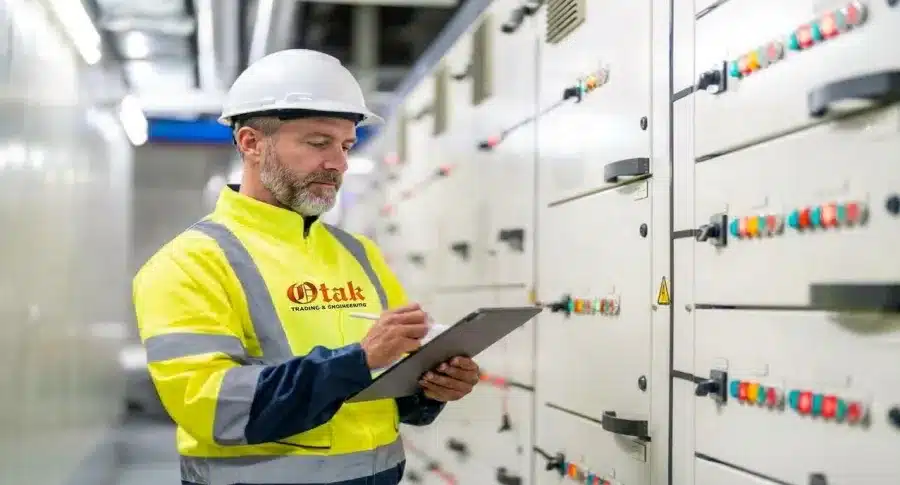
Professional operations and maintenance play an important role in maintaining the controls that protect an industrial facility.
Maintenance activities can help preserve the condition of critical equipment and safety systems. Effective operating procedures and disciplined handovers can reduce the likelihood of errors during routine and non-routine activities. Competent personnel can identify abnormal conditions and respond before they develop into more serious problems.
The same principle applies to permit-to-work systems, inspections, testing of safety-critical equipment, emergency preparedness, and management of change. These activities are part of the operational control framework that helps maintain safe and consistent facility performance.
For owners, this means that the quality of an O&M contractor should not be assessed only by its ability to keep equipment running. Its approach to operational discipline, asset integrity, workforce competency, HSEQ management, and risk control can also influence how effectively the facility is protected over time.
Looking Beyond Incident Numbers
A low number of reported incidents does not automatically mean that operational risk is well controlled.
In practice, a low incident count can reflect genuinely strong control, or simply that problems are going unreported. The number alone cannot distinguish between the two, which is why owners need to look at the health of the underlying controls rather than the headline figure.
Owners should also consider whether near misses are being reported, whether corrective actions are closed effectively, whether critical safety systems are maintained, and whether recurring issues are being identified and addressed.
These indicators provide greater visibility into the condition of the systems and controls supporting safe operation, rather than relying only on the absence of reported incidents.
Safety Performance as Part of Asset Protection
An industrial asset represents a significant investment, and protecting that investment requires more than maintaining production targets.
Equipment condition, operational reliability, workforce competency, process safety, and risk management all contribute to the long-term performance of the facility. A weakness in any of these areas can affect people, equipment, production, and the wider business.
From an owner’s perspective, strong safety performance can support business continuity by reducing exposure to avoidable operational disruptions and maintaining the controls required for safe and consistent facility operation. This is particularly relevant for organizations whose reputation is closely tied to how responsibly they operate industrial assets.
For facility owners, safety performance is therefore both an operational responsibility and an asset-protection consideration. The objective is not simply to minimize reported incidents, but to maintain the systems, people, and operating practices that control risk before it becomes an event.
To learn more about OTAK’s services, visit our Operations & Maintenance page.