EMT vs IMC vs RGS: Understanding the Differences
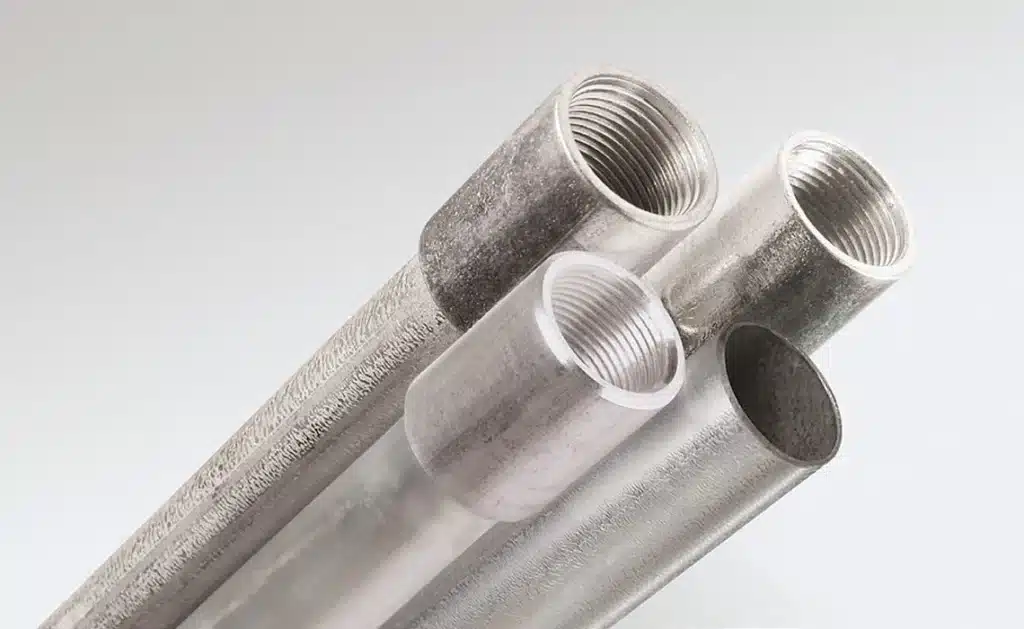
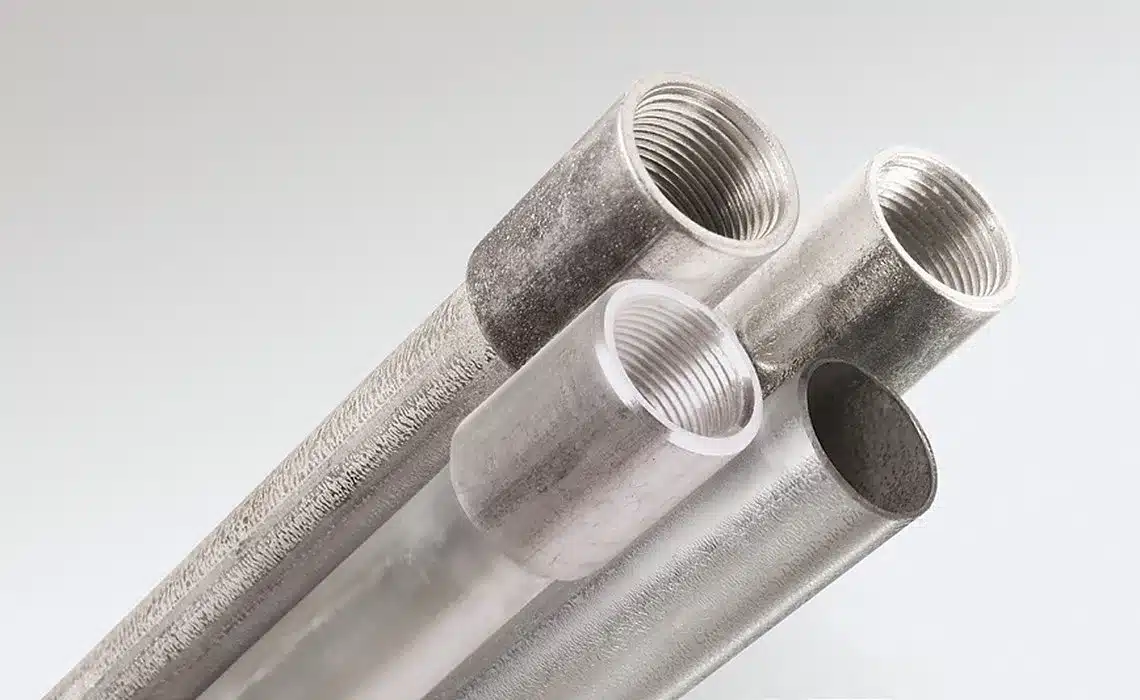
Electrical Metallic Tubing (EMT), Intermediate Metal Conduit (IMC), and Rigid Galvanized Steel (RGS), also known as Rigid Steel Conduit (RSC), are three types of metallic conduit used to protect and route electrical conductors. While they serve the same basic purpose, they differ in wall thickness, weight, connection method, and level of physical protection.
For MEP contractors, consultants, and electrical engineers, understanding these differences helps when reviewing specifications, preparing material takeoffs, and coordinating conduit with the correct fittings and accessories.
Electrical Metallic Tubing (EMT)

EMT is a thin-wall steel conduit with an unthreaded design. Because EMT is not threaded, it is connected using setscrew or compression fittings rather than threaded fittings.
Its thin-wall construction makes EMT the lightest of the three conduit types and generally easier to handle and bend during installation.
Key characteristics of EMT include:
- Thin-wall steel construction
- Unthreaded connection system
- Setscrew or compression fittings
- Lightweight construction
- Easy handling and field bending
- Lower physical protection than IMC and RGS
Intermediate Metal Conduit (IMC)
IMC has a thicker wall than EMT but a lighter construction than RGS. Unlike EMT, IMC is threaded and uses threaded fittings for connections.
Its intermediate wall thickness gives IMC greater physical protection than EMT while keeping its weight below that of RGS.
Key characteristics of IMC include:
- Thicker wall than EMT
- Lighter construction than RGS
- Threaded design
- Threaded fittings and connections
- Greater physical protection than EMT
- Intermediate weight among the three types
Rigid Galvanized Steel (RGS / RSC)
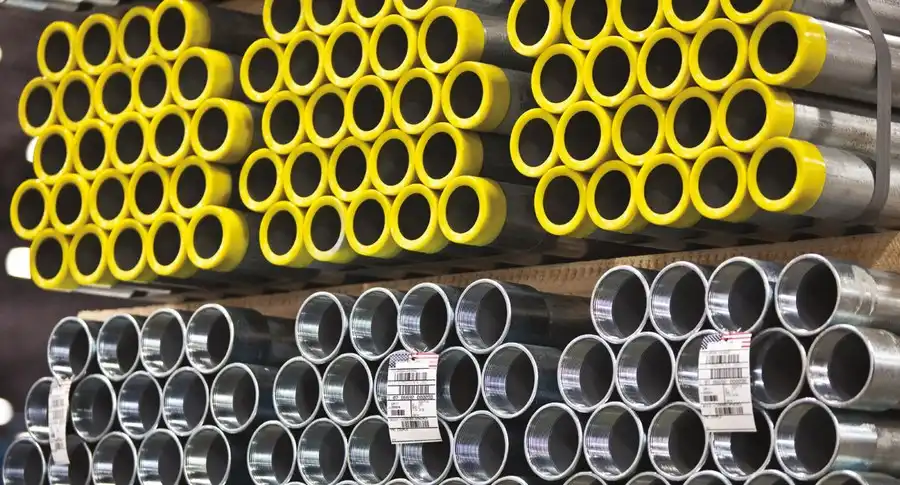
RGS, also known as RSC, is a heavy-wall rigid steel conduit. It is threaded and typically hot-dip galvanized for corrosion resistance.
Among EMT, IMC, and RGS, it has the heaviest wall construction and provides a high-level of physical protection.
Its main characteristics include:
- Heavy-wall steel construction
- Threaded design
- Hot-dip galvanized finish
- Heaviest construction of the three
- High level of physical protection
- Threaded fittings and connections
Summary Table
The main differences between the three conduit types can be summarized as follows:
| Property | EMT | IMC | RGS / RSC |
|---|---|---|---|
| Wall thickness | Thinnest | Intermediate | Heaviest |
| Connection method | Setscrew / compression | Threaded | Threaded |
| Relative weight | Lightest | Intermediate | Heaviest |
| Threaded | No | Yes | Yes |
| Physical protection | Lower than IMC/RGS | High | High |
| Construction | Thin-wall steel | Intermediate-wall steel | Heavy-wall steel |
Wall Thickness and Weight
Wall thickness is one of the main physical differences between EMT, IMC, and RGS. EMT has the thinnest wall and is therefore the lightest of the three. IMC uses a thicker wall than EMT, resulting in greater weight and providing greater mechanical protection. RGS has the heaviest wall and the highest weight.
This construction progression can be summarized as:
EMT → IMC → RGS
from thinner and lighter construction to thicker and heavier construction.
Connection Methods and Fittings
The connection method is another major difference between EMT, IMC, and RGS.
EMT is unthreaded and uses set-screws or compression connectors and couplings. IMC and RGS are threaded and use compatible threaded fittings and couplings.
Because these connection systems are different, the conduit type and fittings should be matched correctly when preparing material lists or coordinating installation.
Fittings and accessories must match the conduit type, dimensions, and applicable standards. Common conduit accessories include:
- Couplings
- Connectors
- Elbows
- Clamps
- Hangers
- Box accessories
Correctly matching the conduit and fittings helps prevent material mismatches during installation.
EMT, IMC, and RGS Manufacturers
OTAK supplies all conduit types—EMT, IMC, and RGS—alongside fittings and accessories from leading manufacturers. Smartube supplies EMT and IMC, while PST, ALEX, and Wheatland offer EMT, IMC, and RGS; EATON and Flexicon provide compatible fittings and accessories.
This range gives contractors the flexibility to source different UL-listed conduit and fitting combinations through OTAK while maintaining system compatibility, based on the required level of mechanical protection, connection method, and applicable standard.
For conduit specifications, product information, or supply requirements, contact our Electromechanical Trading team.