
Manpower Planning for Industrial O&M Facilities
Effective manpower planning for industrial facilities is essential for industrial facilities that depend on reliable operations, maintenance, and technical support. Workforce requirements can vary significantly across departments, shifts, technical disciplines, and operational activities, particularly in large and complex facilities.
For large industrial facilities, workforce planning should go beyond setting a total headcount. Facility owners and operations managers need to consider workload, asset requirements, shift coverage, technical competencies, and operational risks when determining industrial workforce requirements.
A structured manpower plan helps ensure that critical roles are covered, maintenance activities can be completed on schedule, and the facility has sufficient resources to respond to unexpected operational demands.
Understanding Manpower Planning in Facility Operations
Manpower planning is the process of determining how many employees are required, what skills they need, where they are needed, and when their availability is required.
In industrial facilities, the workforce may include engineers, technicians, operators, supervisors, safety personnel, and other specialists. Each role contributes to different operational and maintenance activities.
Effective industrial manpower planning starts with understanding the facility’s assets, operating schedule, maintenance requirements, and expected workload. This provides a more accurate basis for workforce decisions than relying on total headcount alone.
Workforce Planning vs. Simple Headcount
A large workforce does not necessarily mean that a facility has adequate manpower. The available employees must have the skills and availability required for the work.
For example, additional general maintenance workers cannot replace a shortage of qualified electrical technicians when critical electrical equipment requires specialist support. The same applies when staffing levels are sufficient overall but a particular shift lacks the required technical coverage.
Workforce planning therefore considers both the number of employees and their capabilities.
Key Factors in Facility Workforce Planning
Several factors influence manpower requirements for O&M in an industrial facility.
Workload and Operational Requirements
The amount and type of work are among the most important factors when determining workforce requirements. Routine operations, preventive maintenance, corrective maintenance, inspections, emergency response, and technical support each require different resources.
Maintenance workload should also be assessed against the facility’s asset base and maintenance strategy. Facilities with numerous critical assets may require additional technical resources even when overall staffing levels appear adequate.
Regular workload forecasting allows managers to identify capacity gaps before they affect maintenance schedules or operational performance.
Shift Coverage and Working Hours
Many industrial facilities operate continuously or across extended working hours. Staffing requirements must therefore reflect the number of shifts, shift duration, rotation patterns, supervision, and minimum technical coverage.
Planning should also account for weekends, holidays, shutdowns, and periods of increased activity. Staffing requirements during normal daytime operations may differ significantly from those needed during other shifts.
Skills and Competency Requirements
Manpower planning should identify the technical skills required for each part of the facility.
Depending on the operation, technical disciplines may include mechanical, electrical, instrumentation, HVAC, rotating equipment, and other specialized areas. Operations teams may require process operators, control room personnel, supervisors, and other trained staff.
Critical competencies should be identified early so that gaps can be addressed through recruitment, training, or specialist support.
Balancing Preventive and Reactive Maintenance
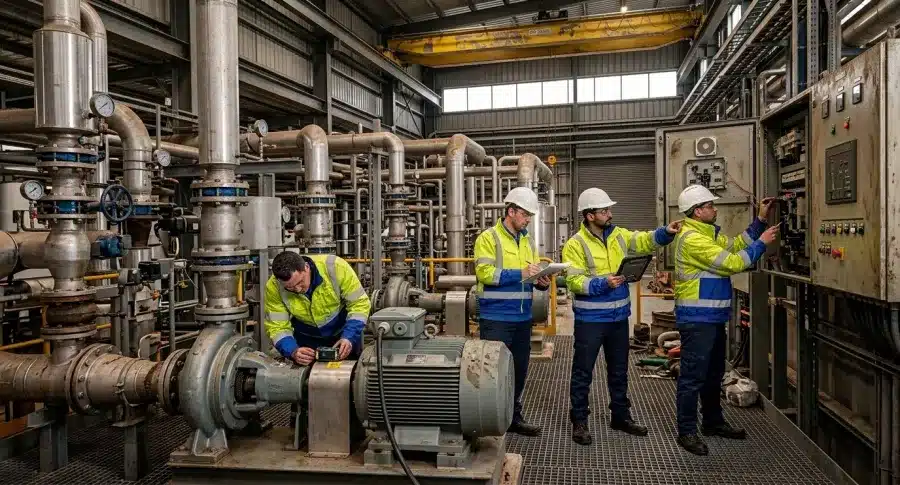
Maintenance planning needs to account for both scheduled activities and unexpected failures. A preventive maintenance program can reduce equipment failures, but corrective work and emergency response will still require available resources.
Planned Maintenance Capacity
Preventive and predictive maintenance should be included when calculating workforce requirements. Managers can compare available maintenance hours with expected workload to determine whether the existing team has sufficient capacity.
Maintenance backlog is another useful indicator. A consistently increasing backlog may suggest insufficient capacity, but other factors such as spare parts, scheduling, and work planning should also be reviewed before adding manpower.
Emergency and Corrective Response
Industrial facilities need enough resources to handle equipment failures without significantly disrupting planned maintenance.
Depending on the facility’s critical systems and response requirements, this may involve standby personnel, additional shift coverage, or access to specialist contractors.
The appropriate model depends on the facility’s operational risks, critical assets, and required response time.
Managing Workforce Availability and Attrition
Planned headcount does not always equal actual workforce availability. Annual leave, absenteeism, training, turnover, and employee reassignment can reduce the resources available for daily operations.
Critical positions may also take longer to replace when they require specific qualifications or experience.
Understanding Replacement Requirements
For example, a facility with 2,000 employees and a 15% annual turnover rate would need to plan for approximately 300 replacement hires each year, before considering workforce growth or changes in operational requirements.
Replacement hiring should be considered separately from additional staffing needed for expansion, increased production, new assets, or changes to the operating model.
Tracking turnover by department and role can provide a more accurate view of replacement requirements than using a single facility-wide rate.
Using KPIs to Improve Manpower Planning
Workforce decisions should be supported by operational and maintenance data. Useful KPIs include:
- Planned vs. available manpower
- Maintenance workload and backlog
- Preventive maintenance completion
- Overtime hours
- Absenteeism and turnover
- Corrective maintenance response time
- Training and competency completion
- Workforce utilization
These indicators can help managers determine whether performance issues are related to staffing levels or other factors such as scheduling, workload distribution, skills, or work planning.
For example, a growing maintenance backlog combined with high overtime may indicate limited workforce capacity. A large backlog with low technician utilization, however, may point to planning, scheduling, or parts availability issues.
Integrating Manpower Planning with O&M Strategy
Workforce requirements can change when new equipment is installed, operating hours increase, maintenance strategies are modified, or O&M activities are outsourced.
For this reason, manpower planning should be reviewed when significant changes are made to the facility’s assets, operations, or maintenance scope.
In-House and Outsourced Workforce
Some facilities combine internal operations teams with outsourced maintenance services or specialist contractors rather than maintaining every technical capability in-house.
Outsourcing can provide access to specialized expertise or additional resources for defined activities while allowing the owner to retain control over core operational responsibilities.
However, outsourcing should be evaluated as part of the overall workforce strategy and should not replace a clear assessment of the facility’s internal staffing requirements. Rresponsibilities, reporting, supervision, response times, and interfaces between internal and external teams should be clearly defined.
The appropriate workforce model depends on the facility’s technical requirements, internal expertise, workload, and long-term O&M strategy.
Building a Scalable Manpower Plan
A manpower plan should be reviewed regularly rather than only when hiring is required. Managers should assess workforce capacity against operational requirements, including:
- Workforce capacity by department and skill
- Current and forecast workload
- Shift and operational coverage
- Turnover, absenteeism, and training requirements
- Changes in assets, production, or operating hours
- Internal and outsourced workforce requirements
Coordination between HR, operations, and maintenance teams is also important. Each department provides different information needed to maintain an accurate and responsive workforce plan.
Selecting the Right Manpower Planning Strategy
Manpower planning for industrial facilities is about aligning workforce resources with operational requirements. The focus should be on having sufficient capacity, relevant technical skills, and appropriate coverage for the work the facility needs to perform
A sound workforce strategy should also distinguish between permanent staffing requirements, temporary increases in workload, specialist support, and outsourced activities.
By integrating manpower planning with the wider O&M strategy, facility owners and managers can make more informed decisions about recruitment, training, workforce allocation, and the use of specialist or outsourced support where appropriate.
OTAK provides Operations & Maintenance services for oil and gas, petrochemical, fertilizer, and other large-scale industrial facilities. Learn more about OTAK’s Operations & Maintenance services.